TEAMWORK vs GROUPISM: When “We” Becomes “Us vs Them” in the Workplace**
Is your organization building teams—or silently creating groups?**
“Sir, we work as a team.”
It sounds positive.
But ask a few more questions:
**Who do you usually have lunch with?**
**Whose opinion do you support in every meeting?**
**Whom do you share information with first?**
**Do you defend your group even when they are wrong?**
**Do you sometimes think, “Our department is better than theirs”?**
If these questions make you uncomfortable, there may be something deeper happening inside the organization.
It may not be a lack of talent.
It may not be a lack of resources.
It may be **GROUPISM**.
And groupism can quietly turn a workplace from **“WE” into “US vs THEM.”**
What Is Teamwork?**
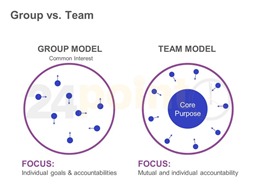
**Teamwork** means people with different roles, personalities, skills and perspectives working together toward a **common goal**.
A good team does not require everyone to think alike.
In fact, healthy teams allow people to disagree, question, contribute ideas and challenge decisions respectfully.
The focus remains:
What is best for the team and the organization?”**
Research on team effectiveness shows that team cohesion, shared understanding of goals and roles, communication, cooperation and constructive conflict management are important contributors to effective teamwork.
A healthy team says:
“I may have a different opinion, but we have the same goal.”**
Then What Is Groupism?**
Groupism happens when people begin forming **exclusive internal groups or camps** based on friendship, personal loyalty, department, seniority, common interests, influence or past relationships—and the loyalty to the group becomes stronger than the commitment to the larger team.
There is nothing wrong with having friends at work.
There is nothing wrong with having informal groups.
The problem begins when the group becomes more important than the organization.**
For example:
* “We don't involve them.”
* “They are from the other department.”
* “Don't tell them yet.”
* “Our people should get the opportunity first.”
* “We will support our colleague no matter what.”
* “Their team always gets the credit.”
* “Why should we help them?”
* “We have our own people.”
This is where **teamwork starts breaking down.**
Teamwork vs Groupism: What Is the Difference?**
| **Teamwork** | **Groupism** |
| ---------------------- | ----------------------- |
| Common goal | Personal/group interest |
| Inclusion | Exclusion |
| Open communication | Selective communication |
| Trust | Suspicion |
| Healthy disagreement | Personal conflict |
| Shared credit | Credit-seeking |
| Cooperation | Competition |
| “We” | “Us vs Them” |
| Organizational success | Group success |
| Constructive feedback | Gossip and criticism |
| Shared responsibility | Blame game |
The biggest difference is simple:
Teamwork expands relationships. Groupism creates boundaries.**
How Do Internal Groups Develop?**
Groupism rarely appears overnight.
It often starts very innocently.
1. Friendship becomes an exclusive circle**
Two or three colleagues become close.
They begin sharing information only among themselves.
Gradually, others feel excluded.
2. Similarity creates comfort**
People naturally feel comfortable with colleagues who think, speak or behave like them.
But when this comfort becomes exclusion, it creates an **“in-group” and “out-group.”**
3. Competition for recognition**
When employees feel that appreciation, promotion, opportunities or visibility are limited, groups may form to protect their interests.
4. Poor communication**
When information is not shared transparently, people start filling the gaps with assumptions.
And assumptions often become:
They are doing this deliberately.”**
5. Leadership favoritism**
If employees perceive that certain people or groups receive preferential treatment, group boundaries can become stronger.
6. Unresolved conflicts**
A disagreement that is not addressed properly can become personal.
Then one disagreement becomes:
“Our people vs their people.”**
Research suggests that conflict management can strengthen team cohesion, while poorly managed relationship conflict can damage team effectiveness.
How Groupism Spoils Teamwork**
1. Communication Starts Breaking Down**
People stop communicating directly.
Instead, they communicate through their preferred group.
Information becomes selective.
And when information is selective, mistakes increase.
Organizational silos can restrict information sharing, resources and innovation; research on reducing workplace silos highlights inclusion, shared goals, two-way communication, relationship-building and trust as important solutions.
2. Gossip Replaces Communication**
Instead of asking:
What actually happened?”**
people start asking:
“Did you hear what they did?”**
Gossip creates stories.
Stories create assumptions.
Assumptions create mistrust.
And mistrust destroys teamwork.
3. People Stop Sharing Knowledge**
Imagine an employee thinking:
“Why should I teach them? They won't help me later.”
This attitude is dangerous.
Knowledge that should flow across the organization becomes trapped inside individual groups.
The organization may have talented people—but it cannot use the full collective intelligence.
4. Credit Becomes More Important Than Contribution**
A healthy team celebrates:
“We achieved this.”**
Groupism asks:
“Who gets the credit?”**
Once credit becomes more important than contribution, collaboration suffers.
5. Blame Culture Develops**
When something goes wrong, instead of asking:
“How can we solve this?”**
people ask:
**“Whose fault is it?”**
The energy moves from **problem-solving to blame-finding.**
*6. New Employees Feel Isolated**
New employees may find it difficult to enter established groups.
They may feel:
* ignored,
* unsupported,
* hesitant to speak,
* afraid of making mistakes,
* excluded from informal information.
This can reduce their confidence and engagement.
7. Innovation Suffers**
Innovation needs different ideas.
But groupism creates **echo chambers**.
People listen mostly to people who already agree with them.
Healthy disagreement can help teams think better; however, divisiveness that interferes with information processing can reduce team performance.
*The Most Dangerous Sentence in an Organization**
It is not:
“I disagree with you.”**
Healthy disagreement is necessary.
The dangerous sentence is:
“We don't work with them.”**
That sentence creates a wall.
And once people start building walls between departments, teams and individuals, organizational goals become secondary.
So, How Can We Convert Groupism into Teamwork?**
The good news is:
Groupism can be reduced.**
But it requires conscious effort from **leaders, managers and employees.**
1. Create One Common Goal**
Ask every department:
“What are we collectively trying to achieve?”**
The answer should not be:
“HR's goal.”
“Operations' goal.”
“Finance's goal.”
It should be:
“Our organization's goal.”**
Shared goals and vision are important elements in breaking down organizational silos.
2. Replace “My Department” With “Our Organization”**
Language influences thinking.
Instead of:
“That's their problem.”**
encourage:
“How can we support them?”**
Instead of:
Our department performed better.”**
say:
“How can our success help the organization?”**
3. Encourage Cross-Functional Teamwork**
Don't allow employees to work only with the people they already know.
Create projects involving different departments.
For example:
HR + Operations + Finance + Sales**
Give them one common assignment.
When people work together toward one goal, many artificial boundaries begin to disappear.
*4.Make Communication Transparent**
Important information should not remain restricted to a particular group without a genuine reason.
Encourage:
* open meetings,
* shared information,
* clear responsibilities,
* documented decisions,
* two-way communication,
* regular team updates.
5. Reward Collaboration—Not Politics**
If organizations reward only individual achievement, employees may compete against one another.
Recognize people who:
* help another department,
* share knowledge,
* mentor colleagues,
* solve conflicts,
* support new employees,
* improve cross-functional cooperation.
*Reward the behaviour you want to see repeated.**
6. Address Conflict Early**
Don't wait until a small disagreement becomes a major interpersonal conflict.
Use the simple rule:
*Discuss → Understand → Resolve → Move Forward**
Don't allow:
Discuss → Gossip → Form a group → Take sides → Escalate**
Conflict management is not about eliminating every disagreement. It is about ensuring disagreement does not become destructive. Research has found positive links between effective conflict management, team cohesion and perceived team performance.
7. Build Psychological Safety**
Employees should feel comfortable saying:
“I have a different opinion.”**
“I made a mistake.”**
“I don't understand.”**
“I need help.”**
“I disagree with this decision.”**
Without being humiliated or socially punished.
Team research identifies psychological safety, trust, collective efficacy and shared mental models as important conditions for effective teamwork and organizational safety.
8. Leaders Must Stop Taking Sides**
Leaders have enormous influence on group dynamics.
If employees see the leader consistently favouring one group, others may naturally create their own camps.
A leader should ask:
“Am I creating followers—or building a team?”**
Leadership should be:
Fair. Transparent. Consistent. Approachable. Accountable.**
A Simple Activity for Organizations: “ONE TEAM”**
During a team-building session, divide participants into mixed groups—not their usual friendship or departmental groups.
Give them one common challenge.
Tell them:
“You will succeed only if every member contributes.”**
After the activity, ask:
1. Who naturally became the leader?
2. Did everyone get an opportunity to speak?
3. Did you listen to different opinions?
4. Did anyone feel excluded?
5. Did your group initially form around familiar people?
6. What happened when someone disagreed?
7. What helped the group succeed?
8. What behaviour would you take back to your workplace?
This simple reflection can make people **experience the difference between group behaviour and team behaviour.**
A Powerful Reflection for Every Employee**
Ask yourself:
“When I enter my workplace every morning, am I carrying the mindset of MY GROUP or OUR TEAM?”**
There is nothing wrong with having friends.
There is nothing wrong with having professional networks.
There is nothing wrong with disagreement.
But when personal groups become stronger than the organizational purpose, **teamwork begins to suffer.**
The Golden Rule of Teamwork**
“Don't build a team where everyone agrees with you. Build a team where everyone works toward the same goal.”**
A successful organization does not need employees who think identically.
It needs employees who can think differently **and still work together.**
**From “ME” to “WE”**
A healthy workplace moves through a simple journey:
ME → MY GROUP → OUR TEAM → OUR ORGANIZATION**
The final destination is not to eliminate every internal relationship or friendship.
The goal is to ensure that **relationships support teamwork rather than replace it.**
Because at the end of the day:
**A group may protect its members.**
**But a team protects the mission.**
And when everyone understands that difference, **groupism loses its power and teamwork gets stronger.**
**Final Thought**
The biggest challenge for an organization is not always finding talented people.
Sometimes it is teaching talented people to **work together.**
Your organization may have brilliant individuals.
But brilliance without collaboration can remain isolated.
When people trust each other, communicate openly, manage conflict constructively and work toward a shared purpose, individual strengths can become **collective strength**. Research consistently supports the importance of cohesion, shared goals, communication, cooperation and effective conflict management in team effectiveness.
Don't ask only: “Who is the best employee?”**
Ask:
How well do our best employees work together?”**
Want to Build a Stronger, More Collaborative Team?**
 August 31, 2026